So many of us are all too familiar with the tactic of putting on a face, hiding whatever we’re actually feeling in lieu of keeping peace, not making situations feel sad/ awkward, or otherwise known as “masking.” It’s something that I’ve noticed millennials have particularly gone pro in. As a generation of people pleasers, we’ve grown to adapt our own emotions to fit the ones of those around us. It’s a horrible habit of tangles and knots that therapy and practice can untangle, but is anything but easy. For many of us, even admitting that we’re not doing so great can feel so habitually wrong. This makes ANY change in our lives (especially pregnancy) and the roller coaster of emotions that comes with it extremely difficult to navigate. Add on pre-existing mental health diagnoses and the foundations for a very difficult transition into a new chapter of life can be unstable, weak, and nowhere near the right grounds to build anything off of.
It’s so customary for us to respond to the question “how are you?” with “good, great, fine, ok, etc.” even when we’re the farthest thing from any of those. Over the years, I’ve tried to practice saying the truth about how I’m feeling whenever I can. If I am absolutely struggling, I really try to say it (although, I will admit I say it in a way that still prioritizes the other person’s comfort. For example: “Hey Riss, how are you?” “You know, kind of struggling with mental health right now, but hey – this is just a season so I’ll be ok.” I still don’t want to put anyone in a place of feeling like “oh… I uh – wasn’t expecting you to say something negative and now I don’t know how to respond” which is silly.) Why do we do that? Why do we put everyone else’s comfort above our own? Why would it be so bad to tell the absolute truth, allow the person on the listening end to empathize, and then move on? Maybe because most people haven’t done enough work in themselves to understand how to empathize? Or maybe that’s just my own fear; that others won’t understand that I’m not trying to emotionally dump onto them, but instead, just trying to be open enough not to lie to myself when I know damn well that I’m not ok. I don’t expect a therapy session out of every casual conversation. I just wish we didn’t feel like we had to smile through gritted teeth when we are in fact – not ok.
I DO however, think that even with our most challenging struggles, there comes an opportunity to find light. While I see that my follow up in my previous example (about this being a season and that I’ll be ok) tailors to the listeners comfort, I also see it as a way to stay positive and not sink too far into my own struggles or negative emotions. Two things can be true. I can be struggling immensely AND realize that the struggle is a part of a season that I know won’t last forever. It sucks, but it won’t suck forever. I feel like this is the way I can personally contribute to destigmatizing not only the habitual response of “I’m fine,” but also the stigma around mental health. Every single person on this planet has their own challenges with mental health whether they’re aware of them or not. From coping mechanisms, emotional processing, personal/ societal expectations, and everything in between, we ALL have our own battles to fight inside our noggins.
Sometimes, this tactic of mine unfortunately backfires. In being honest, the listener can misinterpret my honesty as self-deprecation and then I get stuck trying to help them understand my intentions. Those conversations can sound like this: “Hey Riss, how are you?” “You know, I’m struggling with my changing body during this season, but hey – it’s part of the game and I know I’m worth more than my outer appearance.” “OH MY GOSH! WHAT!? YOU’RE SO BEAUTIFUL WHY DO YOU FEEL LIKE THAT? YOU’RE NOT UGLY! YOU LOOK AMAZING! YOU’LL BOUNCE RIGHT BACK! YOU’RE SO PRETTY!” In my head in those moments, I laugh because I didn’t think I said I felt ugly or that I look bad. Just that I was struggling. This doesn’t always happen, but occasionally, I’ll find myself chuckling and saying “welp… A for effort.” I’ve also learned that when people respond in ways that don’t correlate to our statements, it’s usually more of a projection of their own mental health. You’ll see what other people fear, struggle with, and harbor through their own responses to things. It’s something that’s helped me tremendously with not taking other people’s unexpected emotions personally. Someone has an outburst that seems to come out of nowhere or doesn’t line up with your intentions? It’s rarely about you or your words and almost always more about what was triggered in THEM. Same thing works for our own strong emotions; when someone says something that elicits a strong emotional response in us, that’s our cue to pause and think about what’s happening inside of us. WHY did whatever they say bother us? Where is the reaction coming from? What sensitive spot in us did they hit with their words or actions? When we’ve taken the time to do the emotional work in ourselves to be able to decipher and pinpoint these things, we can locate the REAL source of the emotion instead of just seeing their words as maliciously thrown daggers.
I’ve been very lucky to have had a pretty easy-going pregnancy compared to what I know many have experienced. I didn’t ever actually throw up from morning sickness, my doctors have given me different meds for headaches, nausea, and indigestion making life a heck of a lot easier. I’ve been able to keep moving, baby boy is growing steadily, is healthy, and I’m surrounded by a community of support (not to mention doing this alongside my best friend who is already a great husband and father without being married or baby being here yet.) These fortunate circumstances don’t negate the fact that most days, I don’t feel ok. I wake up feeling like a stranger in my body, I feel fear for the future of my career, my body, and my stability. I’m constantly uncomfortable, my routines are thrown off if not completely gone, and I worry about postpartum depression by the hour. My response lately to “how are you?” has been “large and in charge.” It’s become my own way of diffusing the tension I feel with my dissatisfaction of my appearance while also being honest. I feel fucking huge, but I don’t want the “you’re so beautiful/ fit/ tiny/ athletic/ etc” comments so I add in a flare of my own light hearted honesty to keep it fun. Plus, the “in charge” part feels empowering. I AM in charge of this season. Amidst a plethora of changes that feels out of my control, at the end of the day – I AM in charge of how I react to all of this and I chose power. Some days, my pessimism gets the better of me and my response is “I feel like a fucking whale” but I try really hard to avoid that. As comedic as it feels to me in the moment, it never gets a response other than the never-ending list of body-based compliments from the person listening and it’s not worth it.
I’m happy to say that for the most part, being honest about how I’m feeling has done exactly what I hope it will. When I tell people I feel uncomfortable and I’m ready to be done being pregnant, most of the responses are something like “you’re almost there!” or sources of encouragement like “You’re doing so great!” After that, we move on to something else. THAT’S the win. Honesty, acknowledgment, empathy, encouragement, and moving on. I don’t’ have to stand there and pretend everything is just peachy, we don’t have to dwell on the negative, and both party’s contributions feel productive. I love these moments when they happen. Everyone can help destigmatize mental health struggles by following those steps whether you’re listening or going through it yourself.
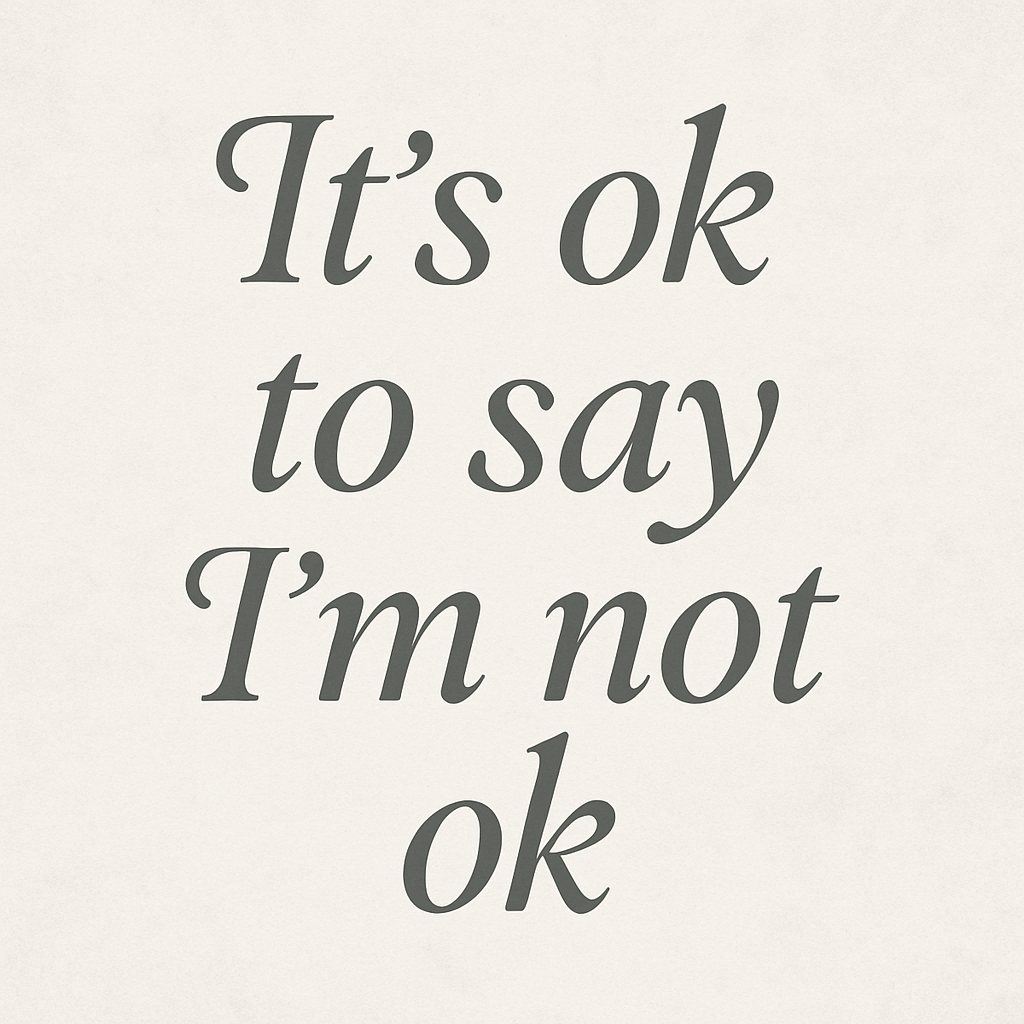
The most important part of this though, is for all of us to remember the title of this post: It’s OK to not be OK. If you find yourself unsure of how to respond to someone’s discomfort or struggle, this can be the most reassuring and confirming thing to hear. Let them know It’s ok! They don’t have to be ok! There’s no law saying we have to pretend to be ok if we simply aren’t. This is empathy at its core – acknowledging someone’s pain, agreeing it sucks, and taking a moment with the person experiencing it to let them know they’re not alone. No need to try and fix it or offer suggestions. Just pure, empathetic, understanding in that moment with them. I think most of the time, that’s all I’m craving in my moments of honesty. I just want the people around me to be aware of what I’m feeling so it doesn’t feel like I have to hide. I don’t need a fix for it. Just to know they’re aware. It feels so much nicer when the ones around me just KNOW I’m struggling. Somehow, it makes the struggle feel SO much lighter versus how heavy it feels when no one knows and I feel like I’m waging war without a single person being able to see. Once they know, I feel like I don’t have to pretend. I don’t have to try and look happy. I can just exist in whatever way I feel in that moment and it’s liberating. This freedom mixed with my own flare of trying to see the light is how I get through the hardest days. Your experience or the experience of those around you may look different and that’s ok. Pregnancy brings so many changes that often come with strong feelings attached to them. We’re letting go of a lot of the things we’re used to or found comfort in, our bodies aren’t the same by any means, our lives look different from our priorities to our routines, and we’re transitioning into a completely different way of existing. It’s scary, it’s hard, and it’s the perfect grounds for strong emotions to manifest. Hiding those emotions or masking them only makes them harder to cope with. Being honest, hanging onto the truths of our situations, and finding comfort in our support people is so important.
I know Therapy can be REALLY difficult for people to access because of pricing. I’m not an advocate for AI, but in cases like this where the chance to practice healthy coping mechanisms can be the difference between life and death, I’ll advocate for life every time. An app I started using during pregnancy after I lost my job called “Youper” was extremely helpful and I still occasionally use it to this day when I feel myself sinking really low. It uses a combination of proven therapy tactics like cognitive behavioral therapy with AI to build coping mechanisms and help you work through tough emotions and situations for $70 a year. If you CAN afford therapy, I’ll always recommend finding a therapist that works for you (sometimes it takes cycling through a handful before finding YOURS.) Real, professionally trained humans who can offer guidance and empathy will always be the better option, but when I was broke, borderline suicidal, and feeling hopeless – this app came through for me. (I’m not in any way a representative for any apps or companies. Just hoping to share what has helped me.)

If you find yourself in a place of not being ok, remember that is perfectly ok. You never have to pretend to be ok, but it takes practice to get to a place where not being ok feels ok. I promise, it does get easier the more you use honesty and openness with those around you. It’s scary at first because you’re actively choosing vulnerability, but it’s 100% worth every second of temporary discomfort whereas every second of discomfort that comes from hiding is NEVER worth the pain it brings. If you’re not ok right now, I encourage you to find support and help wherever you can. Lean on those around you, seek professional help, and don’t let your mind become a prison during this challenging time of your life. This IS just a season. They come and go and we endure. Know you’re not alone because I am also not ok. I’m stressed, exhausted, scared, feeling extremely dissatisfied in my own skin, and at the same time – doing my best. That’s all we can do – our best. Remember your best will look different every single day. So, every day when you wake up, make a vow to yourself to do YOUR best on that day. Don’t compare your best from today to your best from yesterday. Just do your best for today and take each day one step at a time. You’re doing great.